Photocatalytic coating Product List and Ranking from 53 Manufacturers, Suppliers and Companies | IPROS

Last Updated: Aggregation Period:Mar 11, 2026~Apr 07, 2026
This ranking is based on the number of page views on our site.

Photocatalytic coating Manufacturer, Suppliers and Company Rankings

Last Updated: Aggregation Period:Mar 11, 2026~Apr 07, 2026
This ranking is based on the number of page views on our site.

  1. イデア Hyogo//Trading company/Wholesale
  2. 日本ジェット・オン 本社 Tokyo//Building materials, supplies and fixtures manufacturers
  3. チタンネクストジャパン Tokyo//Other construction industries
  4. 4 ユーポン Tokyo//Trading company/Wholesale
  5. 5 メンテックカンザイ Tokyo//Building Management

Photocatalytic coating Product ranking

Last Updated: Aggregation Period:Mar 11, 2026~Apr 07, 2026
This ranking is based on the number of page views on our site.

  1. Solvent Recycler イデア
  2. Catalog: Solvent Recycler ユーポン
  3. Solvent Recycler 日本ジェット・オン 本社
  4. Signal Grip メンテックカンザイ
  5. 5 Non-slip master メンテックカンザイ

Photocatalytic coating Product List

1~30 item / All 113 items

Displayed results

Adopted by hospitals and medical institutions! Space sterilizer 'CL-α' that prevents bacteria from the source!

"Creating a space that suppresses the growth of bacteria" absorbs "proteins" in the air that are the source of viruses! It prevents the occurrence of bacteria not just locally, but throughout the entire space.

"CL-α" is a device that disinfects and deodorizes spaces using a double effect from chlorine dioxide in both "solid" and "gel" forms. Utilizing the property of chlorine dioxide to spread in areas with low concentration, it can cover spaces of up to approximately 30 tatami mats. It is said that viruses become activated by requiring "proteins" present in the air. "CL-α" absorbs these proteins to inactivate the viruses. Currently, it is being implemented in various places such as hospitals, nursing facilities, restaurants, and offices. Additionally, it has been verified to be effective against unpleasant odors in daily life and demonstrates effectiveness in suppressing specific malodorous substances designated by the Ministry of the Environment. The deodorizing effects against acetaldehyde and ammonia have been proven through tests by third-party organizations. 【Applicable unpleasant odors】 Ammonia (toilet odor, urine odor), triethylamine (fish decay odor), methyl mercaptan (vegetable decay odor), acetaldehyde (tobacco odor, body odor during hangovers), etc. *For more details, please refer to the materials. Feel free to contact us with any inquiries.

  • Safety and consumables
  • Photocatalytic coating

Added to bookmarks

Bookmarks list

Bookmark has been removed

Bookmarks list

You can't add any more bookmarks

By registering as a member, you can increase the number of bookmarks you can save and organize them with labels.

Free membership registration

[Construction Example] Toilet Anti-Soiling and Deodorization Measures

Decomposing odor-causing substances and improving maintenance! Introducing examples of installation on floors, ceilings, and walls.

We would like to introduce a case where UDD catalytic glass coating and photocatalytic coating were applied for anti-soiling and deodorization measures in the restroom. The floor was coated with UDD catalytic glass coating, which has antibacterial, deodorizing, and anti-mold functions. The inorganic and durable glass film provides long-term anti-soiling, waterproofing, deodorization, and antibacterial properties, suppressing the growth of bacteria and moisture absorption in the coated areas, thereby improving maintainability. The walls and ceiling were coated with photocatalytic material that has anti-soiling, antibacterial, deodorizing, and anti-mold functions. The organic decomposition function of titanium oxide breaks down the substances causing unpleasant odors, reducing and eliminating bad smells lingering in the restroom for an extended period. 【Features of UDD Catalytic Glass Coating】 - Has antibacterial, deodorizing, and anti-mold functions - Provides long-term anti-soiling, waterproofing, deodorization, and antibacterial properties due to the inorganic and durable glass film, suppressing the growth of bacteria and moisture absorption in the coated areas, thereby improving maintainability. *For more details, please refer to the PDF document or feel free to contact us.

  • Photocatalysts and various wall materials (exterior and interior walls, etc.)
  • Photocatalytic coating

Added to bookmarks

Bookmarks list

Bookmark has been removed

Bookmarks list

You can't add any more bookmarks

By registering as a member, you can increase the number of bookmarks you can save and organize them with labels.

Free membership registration

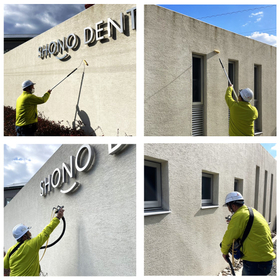
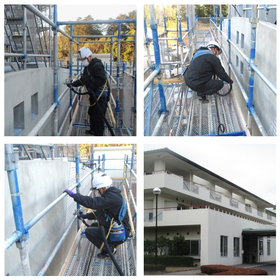
This is an example of photocatalytic treatment for anti-dirt measures on the exterior walls of a dental clinic.

The hydrophilic effect of photocatalysts (self-cleaning effect) makes it easier for rain to wash away dirt from the glass of detached houses, creating a clean environment.

By applying a titanium dioxide aqueous solution, which is the raw material for photocatalysts, to the ceilings and walls of buildings, it exhibits effects such as dirt resistance, deodorization, antibacterial properties, antiviral properties, and mold prevention. When light hits the surface of the indoor photocatalyst application, reactive oxygen species are generated on the surface, breaking down organic substances that cause dirt and odors into harmless water and carbon dioxide. Additionally, the surface of the outdoor photocatalyst application utilizes a hydrophilic effect, where rainwater spreads thinly under the dirt, contributing to self-cleaning as the dirt flows away with the water, thus maintaining the building's aesthetic and reducing cleaning costs. Since the raw material for the photocatalyst, titanium dioxide, is inorganic, it does not degrade due to ultraviolet rays or other factors, and its effectiveness continues for a long time.

  • Photocatalysts and various wall materials (exterior and interior walls, etc.)
  • Photocatalytic coating

Added to bookmarks

Bookmarks list

Bookmark has been removed

Bookmarks list

You can't add any more bookmarks

By registering as a member, you can increase the number of bookmarks you can save and organize them with labels.

Free membership registration

This is an example of photocatalytic treatment for anti-dirt measures on the exterior wall of a dental clinic.

The hydrophilic effect of photocatalysts (self-cleaning effect) makes it easier for rain to wash away dirt from the exterior walls of dental clinics, creating a clean environment.

By applying a titanium dioxide aqueous solution, which is the raw material for photocatalysts, to the ceilings and walls of buildings, it exhibits effects such as dirt resistance, deodorization, antibacterial properties, antiviral properties, and mold prevention. When light hits the surface of the indoor photocatalyst, reactive oxygen species are generated, which decompose organic substances that cause dirt and odors into harmless water and carbon dioxide. Additionally, the surface of the outdoor photocatalyst, when exposed to rain, utilizes a hydrophilic effect that spreads water thinly beneath the dirt, allowing for self-cleaning as the dirt flows away with the water, contributing to the maintenance of the building's appearance and reducing cleaning costs. Since the raw material for the photocatalyst, titanium dioxide, is inorganic, it does not degrade due to ultraviolet rays or other factors, and its effects continue for a long time.

  • Photocatalysts and various wall materials (exterior and interior walls, etc.)
  • Photocatalytic coating

Added to bookmarks

Bookmarks list

Bookmark has been removed

Bookmarks list

You can't add any more bookmarks

By registering as a member, you can increase the number of bookmarks you can save and organize them with labels.

Free membership registration

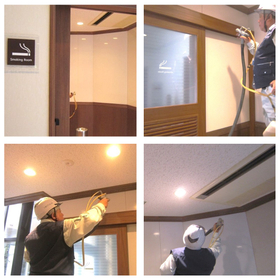
This is a case study of photocatalytic treatment for stain prevention and odor removal in smoking rooms of resort hotels.

The photocatalytic oxidation power decomposes and suppresses/reduces the causes of indoor odors, bacteria, and viruses, creating a clean environment.

By applying a titanium dioxide aqueous solution, which serves as the raw material for photocatalysts, to the ceilings and walls of buildings, it exhibits effects such as anti-soiling, deodorization, antibacterial properties, antiviral properties, and mold prevention. When light hits the surface of the indoor photocatalyst application, reactive oxygen species are generated on the surface, decomposing organic substances that cause dirt and odors into harmless water and carbon dioxide. Additionally, the surface of the outdoor photocatalyst application utilizes a hydrophilic effect, where rainwater spreads thinly beneath the dirt, contributing to self-cleaning as the dirt flows away with the water, thus maintaining the aesthetic of the building and reducing cleaning costs. Since the raw material for the photocatalyst, titanium dioxide, is inorganic, it does not degrade due to ultraviolet rays or other factors, and its effectiveness continues for a long time.

  • Photocatalysts and various wall materials (exterior and interior walls, etc.)
  • Photocatalytic coating

Added to bookmarks

Bookmarks list

Bookmark has been removed

Bookmarks list

You can't add any more bookmarks

By registering as a member, you can increase the number of bookmarks you can save and organize them with labels.

Free membership registration

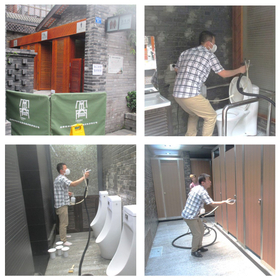
This is a case study of photocatalytic treatment for anti-soiling, deodorization, and antibacterial measures in public restrooms (Chengdu, China).

The photocatalytic oxidation power decomposes and suppresses/reduces odor, bacteria, viruses, and other causative substances in the room, creating a clean environment.

By applying a titanium dioxide aqueous solution, which is the raw material for photocatalysts, to the ceilings and walls of buildings, it exhibits effects such as dirt resistance, deodorization, antibacterial properties, antiviral properties, and mold prevention. When light hits the surface of the indoor photocatalyst, reactive oxygen species are generated, which decompose organic substances that cause dirt and odors into harmless water and carbon dioxide. Additionally, the surface of the outdoor photocatalyst, when exposed to rain, utilizes a hydrophilic effect that allows water to spread thinly beneath the dirt, contributing to self-cleaning as the dirt flows away with the water, thus maintaining the aesthetic of the building and reducing cleaning costs. Since the raw material for the photocatalyst, titanium dioxide, is inorganic, it does not degrade due to ultraviolet rays or other factors, and its effects continue for a long time.

  • Photocatalysts and various wall materials (exterior and interior walls, etc.)
  • Photocatalytic coating

Added to bookmarks

Bookmarks list

Bookmark has been removed

Bookmarks list

You can't add any more bookmarks

By registering as a member, you can increase the number of bookmarks you can save and organize them with labels.

Free membership registration

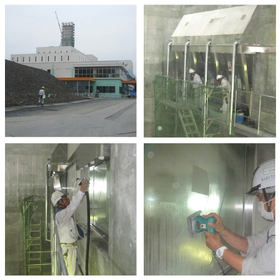
This is a case study of photocatalytic application for anti-soiling measures on glass at a waste treatment facility.

The decomposition of organic dirt using photocatalysts and self-cleaning creates a clean environment by breaking down substances that cause dirt, odors, bacteria, and mold both inside and outside the building.

By coating a titanium dioxide aqueous solution, which is the raw material for photocatalysts, on the ceilings and walls of buildings, it exhibits effects such as dirt resistance, deodorization, antibacterial properties, antiviral properties, and mold prevention. When light hits the surface of the indoor photocatalyst, reactive oxygen species are generated on the surface, decomposing organic substances that cause dirt and odors into harmless water and carbon dioxide. Additionally, the surface of the outdoor photocatalyst, when exposed to rain, utilizes a hydrophilic effect that spreads water thinly beneath the dirt, allowing for self-cleaning as the dirt flows away with the water, contributing to the maintenance of the building's aesthetics and reducing cleaning costs. Since the raw material for the photocatalyst, titanium dioxide, is inorganic, it does not degrade due to ultraviolet rays or other factors, and its effects continue for a long time.

  • Photocatalysts and various wall materials (exterior and interior walls, etc.)
  • Photocatalytic coating

Added to bookmarks

Bookmarks list

Bookmark has been removed

Bookmarks list

You can't add any more bookmarks

By registering as a member, you can increase the number of bookmarks you can save and organize them with labels.

Free membership registration

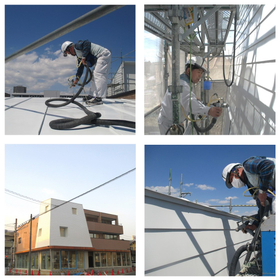
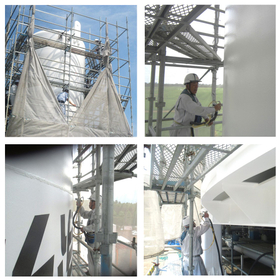
This is an example of photocatalytic treatment for anti-fouling measures on large tanks.

The decomposition of organic dirt using photocatalysts and self-cleaning creates a clean environment by breaking down substances that cause dirt, odors, bacteria, and mold both inside and outside buildings.

By coating the titanium dioxide aqueous solution, which is the raw material for photocatalysts, on the ceilings and walls of buildings, it exhibits effects such as anti-soiling, deodorization, antibacterial properties, antiviral properties, and mold prevention. When light hits the surface of the indoor photocatalyst application, reactive oxygen species are generated on the surface, decomposing organic substances that cause dirt and odors into harmless water and carbon dioxide. Additionally, the surface of the outdoor photocatalyst application has a hydrophilic effect, where rainwater spreads thinly under the dirt, contributing to self-cleaning as it washes away the surface dirt, thus maintaining the aesthetic of the building and reducing cleaning costs. Since the raw material for the photocatalyst, titanium dioxide, is inorganic, it does not degrade due to ultraviolet rays or other factors, and its effectiveness continues for a long time.

  • Photocatalysts and various wall materials (exterior and interior walls, etc.)
  • Photocatalytic coating

Added to bookmarks

Bookmarks list

Bookmark has been removed

Bookmarks list

You can't add any more bookmarks

By registering as a member, you can increase the number of bookmarks you can save and organize them with labels.

Free membership registration

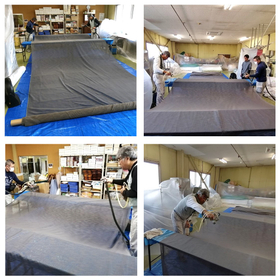
This is a case study of photocatalytic treatment for mold prevention on hotel curtains.

The photocatalytic oxidation power decomposes and suppresses/reduces the causes of indoor odors, bacteria, viruses, and mold, creating a clean environment.

By applying a titanium dioxide aqueous solution, which is the raw material for photocatalysts, to the ceilings and walls of buildings, it exhibits effects such as dirt resistance, deodorization, antibacterial properties, antiviral properties, and mold prevention. When light hits the surface of the indoor photocatalyst application, reactive oxygen species are generated, which decompose organic substances that cause dirt and odors into harmless water and carbon dioxide. Additionally, the surface of the outdoor photocatalyst application has a hydrophilic effect that allows water to spread thinly beneath the dirt when it rains, contributing to self-cleaning as the dirt flows away with the water, thus maintaining the aesthetic of the building and reducing cleaning costs. Since the raw material of the photocatalyst, titanium dioxide, is inorganic, it does not degrade due to ultraviolet rays or other factors, and its effectiveness lasts for a long time.

  • Photocatalysts and various wall materials (exterior and interior walls, etc.)
  • Photocatalytic coating

Added to bookmarks

Bookmarks list

Bookmark has been removed

Bookmarks list

You can't add any more bookmarks

By registering as a member, you can increase the number of bookmarks you can save and organize them with labels.

Free membership registration

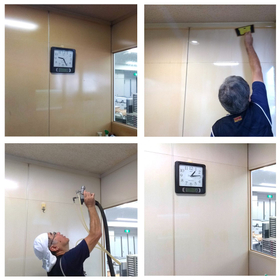
This is a case study of photocatalytic application for anti-soiling measures on glass at a waste disposal facility.

The hydrophilic effect of photocatalysts (self-cleaning effect) makes it easier for rain to wash away dirt from building exteriors and glass, creating a clean environment.

By applying a titanium dioxide aqueous solution, which is the raw material for photocatalysts, to the ceilings and walls of buildings, it exhibits effects such as dirt resistance, deodorization, antibacterial properties, antiviral properties, and mold prevention. When light hits the surface of the indoor photocatalyst application, reactive oxygen species are generated on the surface, breaking down organic substances that cause dirt and odors into harmless water and carbon dioxide. The surface of the outdoor photocatalyst application utilizes a hydrophilic effect, where rainwater spreads thinly beneath the dirt, contributing to self-cleaning as the dirt flows away with the water, thus maintaining the aesthetic of the building and reducing cleaning costs. Since the raw material for the photocatalyst, titanium dioxide, is inorganic, it does not degrade due to ultraviolet rays or other factors, and its effectiveness lasts for a long time.

  • Photocatalysts and various wall materials (exterior and interior walls, etc.)
  • Photocatalytic coating

Added to bookmarks

Bookmarks list

Bookmark has been removed

Bookmarks list

You can't add any more bookmarks

By registering as a member, you can increase the number of bookmarks you can save and organize them with labels.

Free membership registration

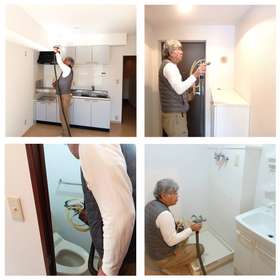
This is an example of photocatalytic treatment for deodorization, antibacterial, and antiviral measures inside an apartment.

The photocatalytic oxidation power decomposes and suppresses/reduces the substances causing odors, bacteria, and viruses in the room, creating a clean environment.

By coating the ceilings and walls of buildings with a titanium dioxide aqueous solution, which is the raw material for photocatalysts, it exhibits effects such as dirt resistance, deodorization, antibacterial properties, antiviral properties, and mold prevention. When light hits the surface of the indoor photocatalyst, reactive oxygen species are generated on the surface, breaking down organic substances that cause dirt and odors into harmless water and carbon dioxide. The surface of the outdoor photocatalyst, when exposed to rain, utilizes a hydrophilic effect that allows water to spread thinly beneath the dirt, contributing to self-cleaning as the dirt flows away with the water, thus maintaining the aesthetic of the building and reducing cleaning costs. Since the raw material for the photocatalyst, titanium dioxide, is inorganic, it does not degrade due to ultraviolet rays or other factors, and its effects last for a long time.

  • Photocatalysts and various wall materials (exterior and interior walls, etc.)
  • Photocatalytic coating

Added to bookmarks

Bookmarks list

Bookmark has been removed

Bookmarks list

You can't add any more bookmarks

By registering as a member, you can increase the number of bookmarks you can save and organize them with labels.

Free membership registration

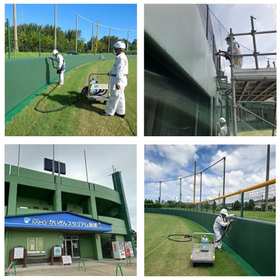
This is a case study of photocatalytic treatment for dirt prevention on baseball field fences.

The decomposition of organic dirt using photocatalysts and self-cleaning creates a clean environment by breaking down substances that cause dirt, odors, bacteria, and mold both inside and outside buildings.

By coating the ceilings and walls of buildings with a titanium dioxide aqueous solution, which is the raw material for photocatalysts, it exhibits effects such as anti-soiling, deodorization, antibacterial properties, antiviral properties, and mold prevention. When light hits the surface of the indoor photocatalyst, reactive oxygen species are generated, which decompose organic substances that cause dirt and odors into harmless water and carbon dioxide. The surface of the outdoor photocatalyst, when exposed to rain, utilizes a hydrophilic effect that allows water to spread thinly beneath the dirt, contributing to self-cleaning as the dirt flows away with the water, thus maintaining the aesthetic appeal of the building and reducing cleaning costs. Since the raw material for the photocatalyst, titanium dioxide, is inorganic, it does not degrade due to ultraviolet rays or other factors, and its effectiveness continues for a long time.

  • Photocatalysts and various wall materials (exterior and interior walls, etc.)
  • Photocatalytic coating

Added to bookmarks

Bookmarks list

Bookmark has been removed

Bookmarks list

You can't add any more bookmarks

By registering as a member, you can increase the number of bookmarks you can save and organize them with labels.

Free membership registration

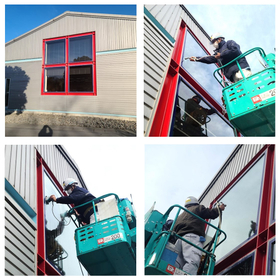
This is a case study of photocatalytic application for anti-dirt measures on glass in logistics facilities.

The hydrophilic effect of photocatalysts (self-cleaning effect) makes it easier for rain to wash away dirt from building exteriors and glass, creating a clean environment.

By applying a titanium dioxide aqueous solution, which is the raw material for photocatalysts, to the ceilings and walls of buildings, it exhibits effects such as dirt resistance, deodorization, antibacterial properties, antiviral properties, and mold prevention. When light hits the surface of the indoor photocatalyst application, reactive oxygen species are generated, which decompose organic substances that cause dirt and odors into harmless water and carbon dioxide. The surface of the outdoor photocatalyst application utilizes a hydrophilic effect, where rainwater spreads thinly beneath the dirt, allowing for self-cleaning as the dirt flows away with the water, contributing to the maintenance of the building's aesthetics and reducing cleaning costs. Since the raw material for the photocatalyst, titanium dioxide, is inorganic, it does not degrade due to ultraviolet rays or other factors, and its effects continue for a long time.

  • Photocatalysts and various wall materials (exterior and interior walls, etc.)
  • Photocatalytic coating

Added to bookmarks

Bookmarks list

Bookmark has been removed

Bookmarks list

You can't add any more bookmarks

By registering as a member, you can increase the number of bookmarks you can save and organize them with labels.

Free membership registration

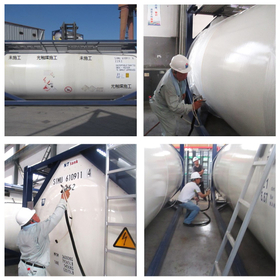
This is a case study of photocatalytic application for anti-fouling measures on ISO tanks.

Decomposing organic dirt with photocatalysts and cleaning hard-to-clean ISO tank stains, making them clean with the power of rain.

By applying a titanium dioxide aqueous solution, which is the raw material for photocatalysts, to the ceilings and walls of buildings, it exhibits effects such as anti-fouling, deodorization, antibacterial properties, antiviral properties, and mold prevention. When light hits the surface of the indoor photocatalyst application, reactive oxygen species are generated on the surface, breaking down organic substances that cause dirt and odors into water and carbon dioxide, rendering them harmless. The surface of the outdoor photocatalyst application has a hydrophilic effect, which causes water to spread thinly under dirt when it rains, allowing for self-cleaning as the surface dirt flows away, contributing to the maintenance of the building's appearance and reducing cleaning costs. Since the raw material of the photocatalyst, titanium dioxide, is inorganic, it does not degrade due to ultraviolet rays or other factors, and its effects continue for a long time. A glass coating on floor tiles creates a strong water-repellent surface. The water-repellent effect prevents the penetration of wastewater, such as urine, making it easier to clean, and also reduces odors caused by bacteria and other sources. A glass coating on floor tiles creates a strong water-repellent surface. The water-repellent effect prevents the penetration of wastewater, such as urine, making it easier to clean, and also reduces odors caused by bacteria and other sources.

  • Photocatalysts and various wall materials (exterior and interior walls, etc.)
  • Photocatalytic coating

Added to bookmarks

Bookmarks list

Bookmark has been removed

Bookmarks list

You can't add any more bookmarks

By registering as a member, you can increase the number of bookmarks you can save and organize them with labels.

Free membership registration

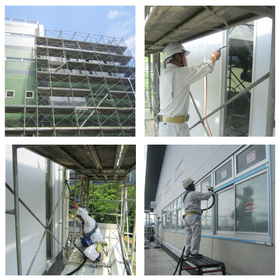
This is an example of photocatalytic application for anti-soiling measures on the exterior walls of a support facility for people with disabilities.

The decomposition of organic contaminants using photocatalysts and self-cleaning creates a clean environment by breaking down the substances that cause dirt and mold on building facades.

By applying a titanium dioxide aqueous solution, which is the raw material for photocatalysts, to the ceilings and walls of buildings, it exhibits effects such as dirt resistance, deodorization, antibacterial properties, antiviral properties, and mold prevention. When light hits the surface of the indoor photocatalyst, reactive oxygen species are generated, which decompose organic substances that cause dirt and odors into harmless water and carbon dioxide. The surface of the outdoor photocatalyst, when exposed to rain, utilizes a hydrophilic effect that allows water to spread thinly beneath the dirt, contributing to self-cleaning as the dirt flows away with the water, thereby maintaining the aesthetic of the building and reducing cleaning costs. Since the raw material for the photocatalyst, titanium dioxide, is inorganic, it does not degrade due to ultraviolet rays or other factors, and its effectiveness continues for a long time.

  • Photocatalysts and various wall materials (exterior and interior walls, etc.)
  • Photocatalytic coating

Added to bookmarks

Bookmarks list

Bookmark has been removed

Bookmarks list

You can't add any more bookmarks

By registering as a member, you can increase the number of bookmarks you can save and organize them with labels.

Free membership registration

This is an example of photocatalytic treatment in a smoking room (for stain prevention and odor removal).

The photocatalytic oxidation power decomposes and reduces the components of tar stains in smoking rooms, creating a clean environment.

■Titanium Dioxide Raw Material By applying a titanium dioxide aqueous solution, which serves as the raw material for photocatalysts, to the ceilings and walls of buildings, it exhibits effects such as dirt resistance, deodorization, antibacterial properties, antiviral properties, and mold prevention. ■Indoor Photocatalyst When light hits the surface of the indoor photocatalyst, reactive oxygen species are generated on the surface, breaking down organic substances that cause dirt and odors into water and carbon dioxide, rendering them harmless. ■Outdoor Photocatalyst When rain falls on the surface of the outdoor photocatalyst, a hydrophilic effect causes water to spread thinly under the dirt, allowing for self-cleaning as the dirt flows away with the water, contributing to the maintenance of the building's appearance and reduction of cleaning costs. ■Duration of Photocatalytic Effect Since titanium dioxide, the raw material for photocatalysts, is inorganic, it does not degrade due to ultraviolet light or other factors, and the effect continues for a long time as long as the coating substrate's paint surface or wallpaper does not peel off.

  • Photocatalysts and various wall materials (exterior and interior walls, etc.)
  • Photocatalytic coating

Added to bookmarks

Bookmarks list

Bookmark has been removed

Bookmarks list

You can't add any more bookmarks

By registering as a member, you can increase the number of bookmarks you can save and organize them with labels.

Free membership registration

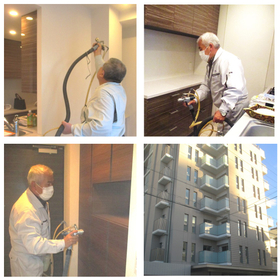
This is an example of photocatalytic treatment in a condominium interior (deodorization, antibacterial, and mold prevention).

The photocatalytic oxidation power decomposes and suppresses/reduces the substances causing indoor odors, bacteria, viruses, and mold, creating a clean environment.

■Titanium Dioxide Raw Material By coating a titanium dioxide aqueous solution, which serves as the raw material for photocatalysts, on the ceilings and walls of buildings, it exhibits effects such as dirt resistance, deodorization, antibacterial properties, antiviral properties, and mold prevention. ■Indoor Photocatalyst When light hits the surface of the indoor photocatalyst, reactive oxygen species are generated on the surface, decomposing organic substances that cause dirt and odors into harmless water and carbon dioxide. ■Outdoor Photocatalyst When rain hits the surface of the outdoor photocatalyst, a hydrophilic effect causes water to spread thinly beneath the dirt, contributing to self-cleaning as the dirt flows away with the water, thus maintaining the aesthetic of the building and reducing cleaning costs. ■Duration of Photocatalytic Effect Since titanium dioxide, the raw material for photocatalysts, is inorganic, it does not degrade due to ultraviolet light or other factors, and the effect continues for a long time as long as the coating substrate's paint surface or wallpaper does not peel off.

  • Photocatalysts and various wall materials (exterior and interior walls, etc.)
  • Photocatalytic coating

Added to bookmarks

Bookmarks list

Bookmark has been removed

Bookmarks list

You can't add any more bookmarks

By registering as a member, you can increase the number of bookmarks you can save and organize them with labels.

Free membership registration

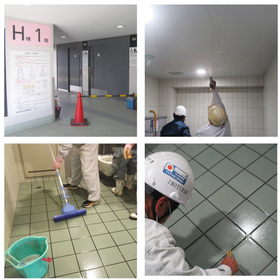
This is a case study of photocatalytic treatment for airport parking lot restrooms (anti-soiling and deodorization measures).

The photocatalytic oxidation power decomposes and reduces the odor-causing substances in the toilet. Additionally, the glass coating on the floor tiles suppresses the penetration of urine and other substances.

■Titanium Dioxide Raw Material By coating a titanium dioxide aqueous solution, which serves as the raw material for photocatalysts, on the ceilings and walls of buildings, it exhibits effects such as dirt resistance, deodorization, antibacterial properties, antiviral properties, and mold prevention. ■Indoor Photocatalyst When light hits the surface of the indoor photocatalyst, reactive oxygen species are generated on the surface, breaking down organic substances that cause dirt and odors into water and carbon dioxide, rendering them harmless. ■Outdoor Photocatalyst When rain hits the surface of the outdoor photocatalyst, a hydrophilic effect causes water to spread thinly beneath the dirt, allowing for self-cleaning as the dirt flows away with the water, contributing to the maintenance of the building's aesthetics and reducing cleaning costs. ■Duration of Photocatalytic Effect Since titanium dioxide, the raw material for photocatalysts, is inorganic, it does not degrade due to ultraviolet rays or other factors, and the effect continues for a long time as long as the coating substrate's paint surface or wallpaper does not peel off. ★A glass coating on floor tiles creates a strong water-repellent surface. The water-repellent effect prevents the penetration of waste water such as urine, making it easier to clean, and also reduces odors caused by bacteria and other sources.

  • Photocatalysts and various wall materials (exterior and interior walls, etc.)
  • Photocatalytic coating

Added to bookmarks

Bookmarks list

Bookmark has been removed

Bookmarks list

You can't add any more bookmarks

By registering as a member, you can increase the number of bookmarks you can save and organize them with labels.

Free membership registration

This is an example of photocatalytic application for the exterior walls (anti-soiling measures) of a support facility for people with disabilities.

The photocatalytic decomposition of organic dirt and self-cleaning will break down the substances causing dirt both inside and outside the walls of facilities supporting people with disabilities, creating a clean environment.

■Titanium Dioxide Raw Material By coating a titanium dioxide aqueous solution, which is the raw material for photocatalysts, on the ceilings and walls of buildings, it exhibits effects such as dirt resistance, deodorization, antibacterial properties, antiviral properties, and mold prevention. ■Indoor Photocatalyst When light hits the surface of the indoor photocatalyst, active oxygen is generated on the surface, which decomposes organic substances that cause dirt and odors into water and carbon dioxide, rendering them harmless. ■Outdoor Photocatalyst When rain hits the surface of the outdoor photocatalyst, a hydrophilic effect causes water to spread thinly beneath the dirt, contributing to self-cleaning as it flows away along with the surface dirt, thereby maintaining the aesthetic of the building and reducing cleaning costs. ■Duration of Photocatalytic Effect Since titanium dioxide, the raw material for photocatalysts, is inorganic, it does not degrade due to ultraviolet rays or other factors, and the effect continues for a long time as long as the coating substrate's paint surface or wallpaper does not peel off.

  • Photocatalysts and various wall materials (exterior and interior walls, etc.)
  • Photocatalytic coating

Added to bookmarks

Bookmarks list

Bookmark has been removed

Bookmarks list

You can't add any more bookmarks

By registering as a member, you can increase the number of bookmarks you can save and organize them with labels.

Free membership registration

Guidance light

Guidance light

Here is an introduction to the guiding light. Details are provided below. For any other questions, please use the inquiry button on the right.

  • Other lighting fixtures
  • Photocatalytic coating

Added to bookmarks

Bookmarks list

Bookmark has been removed

Bookmarks list

You can't add any more bookmarks

By registering as a member, you can increase the number of bookmarks you can save and organize them with labels.

Free membership registration

Antiviral and antibacterial coating [Refresh Room Construction Example 2]

You can feel safe spending time here as we implement measures against viral infections throughout the entire space. Health Bright has constructed the conference rooms, reception rooms, dining hall, and refresh rooms at Take Den.

Take Den Co., Ltd. has introduced 'Health Bright' as a hygiene measure for the health management of its employees. The entire space, including walls, chairs, tables, and blinds, has been treated in areas such as the entrance, reception room for important clients, and dining and meeting rooms where employees gather. Antibacterial and antiviral processing services are being adopted in various locations, including public facilities, commercial establishments, and hospitals. You can download the catalog of our delivery results. We hope it will be helpful for your consideration. [Overview] ■ Installation site: Take Den Co., Ltd. (Osaka City, Osaka Prefecture) ■ Reason for introduction: Hygiene measures for employee health management ■ Installation locations: - Meeting rooms, reception rooms, multi-purpose meeting rooms, dining rooms, refresh rooms, etc. *In experiments adding Health Bright to airborne coronavirus, a 95% reduction in viral infectivity was confirmed within 2 hours. *Please download the PDF to view the delivery results. Feel free to contact us for detailed specifications.

  • 2022-09-13_13h13_30.png
  • 2022-09-13_13h13_45.png
  • 2022-09-13_13h13_49.png
  • 2022-09-13_13h13_54.png
  • 2022-09-13_13h13_59.png
  • Plastering and painting work
  • Photocatalytic coating

Added to bookmarks

Bookmarks list

Bookmark has been removed

Bookmarks list

You can't add any more bookmarks

By registering as a member, you can increase the number of bookmarks you can save and organize them with labels.

Free membership registration

Antiviral and Antibacterial Coating [Office Construction Case Study 11]

Ensuring peace of mind for important customers and employees with measures against viral infections! Health Bright construction at Toko Co., Ltd. Osaka headquarters and Tokyo headquarters.

Toho Co., Ltd. has implemented "Health Bright" to ensure that all visitors and employees can spend their time more safely and securely. Even in the car interior, which tends to become a closed space and where light is hard to reach, we can carry out antibacterial and antiviral measures 24 hours a day through the power of air. The antibacterial and antiviral processing service has been adopted in various places such as public facilities, commercial facilities, and hospitals. You can download a catalog of our delivery achievements. We hope it will be helpful for your consideration. 【Overview】 ■ Installation location: Toho Co., Ltd. (Chuo-ku, Tokyo) ■ Reason for introduction: To protect our valued customers and employees ■ Installation areas: - Conference rooms, training rooms, reception rooms, waiting rooms - Men's restrooms, women's restrooms, training vehicles, etc. * In experiments adding Health Bright to airborne coronavirus, a 95% reduction in viral infectivity was confirmed within 2 hours. * Please download the PDF to view our delivery achievements. Feel free to contact us for detailed specifications.

  • 2022-09-13_14h22_20.png
  • 2022-09-13_14h22_24.png
  • 2022-09-13_14h22_27.png
  • 2022-09-13_14h22_40.png
  • 2022-09-13_14h22_49.png
  • Plastering and painting work
  • Photocatalytic coating

Added to bookmarks

Bookmarks list

Bookmark has been removed

Bookmarks list

You can't add any more bookmarks

By registering as a member, you can increase the number of bookmarks you can save and organize them with labels.

Free membership registration

Photocatalytic coating for building and residential tile exteriors

The self-cleaning effect created by the photocatalytic coating layer keeps the appearance always beautiful.

The "Photocatalytic Coating for Building and Residential Tile Exteriors" is a coating that, when applied during new construction or after exterior wall cleaning, makes maintenance remarkably easy and helps maintain a beautiful appearance. The titanium dioxide coating layer generates hydrophilic groups, which act to draw water closer to the wall surface. This allows water to penetrate between the exterior wall and dirt, creating an automatic washing effect. With the synergistic effect of this self-cleaning capability and the ability to break down dirt, the frequency of maintenance is reduced, leading to a decrease in cleaning costs. 【Features】 ■ Maintains a beautiful exterior for a long time ■ Exhibits significant effects on tile exteriors ■ An environmental technology that utilizes sunlight *For more details, please refer to the PDF document or feel free to contact us.

  • tile
  • Exterior tiles
  • Interior and exterior tiles
  • Photocatalytic coating

Added to bookmarks

Bookmarks list

Bookmark has been removed

Bookmarks list

You can't add any more bookmarks

By registering as a member, you can increase the number of bookmarks you can save and organize them with labels.

Free membership registration

Photocatalytic Coating "PALCCOAT" [Maintains a State Resistant to Dirt!]

Maintain a dirt-resistant state for a long time without using energy! Additionally, it demonstrates high air purification capabilities indoors!

Photocatalytic coating maintains a dirt-resistant state for a long time without using energy. Additionally, photocatalysts exhibit high air purification capabilities even indoors. Photocatalytic painting is performed using an air spray gun, and since photocatalytic park coating is harmless to humans and animals, it poses no environmental issues. 【Features】 ■ Safe and non-toxic water-soluble coating agent ■ High antibacterial effect ■ Strong anti-mold effect ■ Excellent deodorizing effect ■ Decomposes harmful VOC gases ■ Powerful decomposition effect ■ Coating film has long-lasting durability *For more details, please request materials or view the PDF data available for download.

  • ALC
  • Photocatalysts and various wall materials (exterior and interior walls, etc.)
  • Photocatalytic coating

Added to bookmarks

Bookmarks list

Bookmark has been removed

Bookmarks list

You can't add any more bookmarks

By registering as a member, you can increase the number of bookmarks you can save and organize them with labels.

Free membership registration

Multifunctional vest "It Glows." [360 degrees, 24 LED lights flashing!]

From 16 LEDs to 24! Increased visibility with 8 more LEDs!! You can see the LEDs from 360 degrees!

The multifunctional vest "Hikaru-n desu." features a total of 24 LEDs that flash around the waist, allowing visibility from 360 degrees. Additionally, it is equipped with three pockets, including one on the chest, making it very convenient for storing small items. 【Features】 ■ Increased the number of LEDs from 16 to 24 for improved visibility! ■ LEDs can be seen from 360 degrees! ■ Equipped with three pockets for convenient storage of small items! *For more details, please request a brochure or download the PDF data.

  • Safety and consumables
  • Photocatalytic coating

Added to bookmarks

Bookmarks list

Bookmark has been removed

Bookmarks list

You can't add any more bookmarks

By registering as a member, you can increase the number of bookmarks you can save and organize them with labels.

Free membership registration

The guiding light 'I can see it.'

Revolutionary guide light! 83cm wide and twice as bright as conventional models! A high-performance, high-function guide light that protects lives.

The 'Visible' is an original guiding light that is wider than conventional cylindrical models, with twice the brightness and excellent visibility, making it ideal for nighttime work. The button on the grip allows you to turn it on, off, and switch to flashing mode repeatedly. We offer a lineup of normal red, yellow, blue, green, and white, as well as long versions in red, yellow, blue, green, and white, and a short version with a total length of 387 mm. [Features] ■ Ideal for hazard avoidance ■ Excellent visibility from a distance with a total width of 83 cm ■ High performance and high functionality ■ Brightness is twice that of conventional models ■ High performance and high functionality For more details, please refer to the catalog or feel free to contact us.

  • Safety and consumables
  • Photocatalytic coating

Added to bookmarks

Bookmarks list

Bookmark has been removed

Bookmarks list

You can't add any more bookmarks

By registering as a member, you can increase the number of bookmarks you can save and organize them with labels.

Free membership registration

LED-equipped multifunctional vest "It's Shining."

Rich in color! A multifunctional vest with 24 LEDs that enhances visibility.

The multifunctional vest with LED lights, "Hikaru n desu," features LEDs on the waist as well, providing excellent visibility from the side, making it a highly safe vest. The reflective material on the back has been designed with a wider width to allow for the addition of company names or logos later on. Its double mesh structure makes it durable and long-lasting, achieving both breathability and durability in an ideal design. 【Features】 ■ Ample storage space ■ Outstanding visibility ■ Double mesh structure ■ Rich color options For more details, please refer to the catalog or feel free to contact us.

  • Safety and consumables
  • Photocatalytic coating

Added to bookmarks

Bookmarks list

Bookmark has been removed

Bookmarks list

You can't add any more bookmarks

By registering as a member, you can increase the number of bookmarks you can save and organize them with labels.

Free membership registration

Multifunctional vest "It Glows. LED Sash-Type Safety Vest"

There are 8 colors! A sash-type safety vest with a total of 22 LEDs that light up and blink.

The 'Shining LED Sash-Type Safety Vest' is the perfect vest for those working in railway environments. A total of 22 LEDs light up and flash. There are also LEDs on the waist, and the band width is 5 cm. Battery replacement is easy. There are a total of 8 color variations to choose from. You can select your favorite color. Custom name printing is also available; please consult us. [Features] ■ 22 LEDs light up and flash ■ Sash-type safety vest ■ Easy battery replacement ■ Band width of 5 cm ■ Custom name printing available For more details, please refer to the catalog or feel free to contact us.

  • Safety and consumables
  • Photocatalytic coating

Added to bookmarks

Bookmarks list

Bookmark has been removed

Bookmarks list

You can't add any more bookmarks

By registering as a member, you can increase the number of bookmarks you can save and organize them with labels.

Free membership registration

Telescopic traffic cone

Easy to carry! Foldable telescopic traffic cone.

The "Telescopic Traffic Cone" is a foldable and easy-to-use telescopic traffic cone. When not needed, it can be folded and stored, making it convenient to keep in your car in case of an emergency. It can be used in various situations, such as construction sites, parking lots, and during soccer or futsal practice. Additionally, we offer a "Cone Weight" for the telescopic traffic cone, ensuring stability even on windy days. 【Features】 ■ Easy to carry telescopic design ■ Available in two heights: 41cm and 62cm ■ Three color options: orange, green, and yellow ■ Equipped with reflective material ■ Cone weights also available For more details, please refer to the catalog or feel free to contact us.

  • Safety Supplies
  • Safety and consumables
  • Photocatalytic coating

Added to bookmarks

Bookmarks list

Bookmark has been removed

Bookmarks list

You can't add any more bookmarks

By registering as a member, you can increase the number of bookmarks you can save and organize them with labels.

Free membership registration

Search Keywords Related to Photocatalytic coating